Tucker Hockey
Development Thoughts
Part 1 – Parent Education
For Better Development
Published March 28, 2023
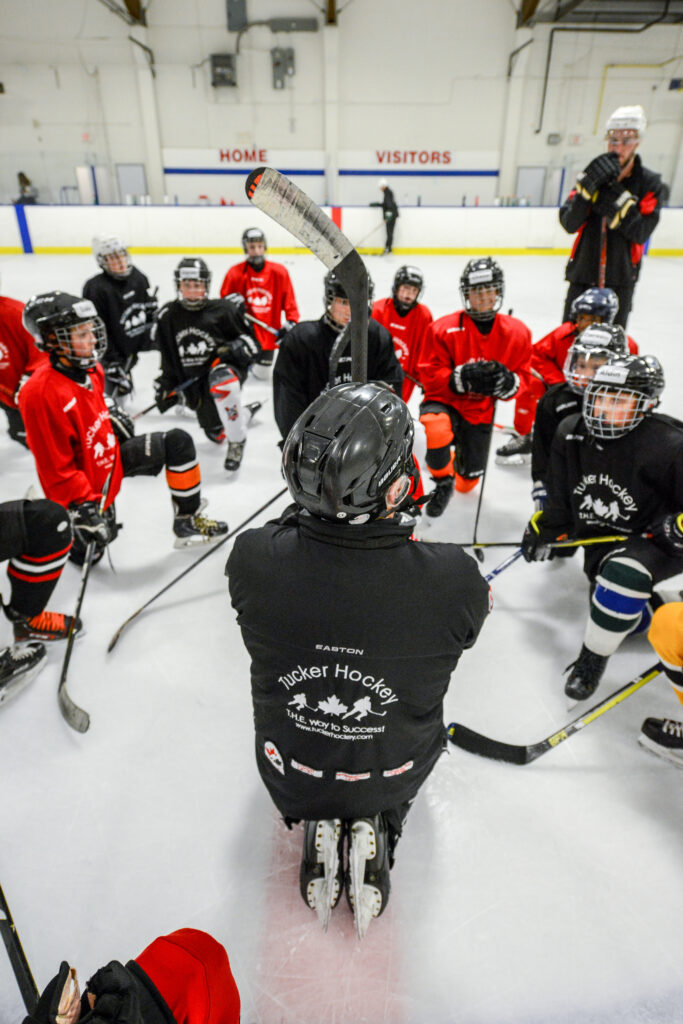
The purpose of this article is to help educate parents about their child’s hockey development and to maximize a player’s future improvements / results within our Tucker Hockey Programs.
Parent Education:
- Finding the “Right” hockey development for your child can often be a challenge. Don’t go to a hardware store looking to buy groceries and be disappointed. Review our Development Matrix for your child’s best overall development needs.
- Read the detailed program / on ice curriculum descriptions listed on our website for the best development fit for your child. You can find a broad selection by:
- Visiting www.tuckerhockey.com
- Select “Register Here”
- Select “Minor”
- Choose the season that you are looking for development “Spring, Summer, Fall and or Winter”.
- View program options and age recommendations for each program.
- Click on program name to view detailed program / on ice curriculum descriptions.
- Know the difference between technical skating (fundamentals), elite skating (advanced skating skills) and evasive skating (tactical / game skating).Know the difference between a Fundamentals Program (basics) vs. Programs of Excellence (advanced / very demanding).
- If your child is registered in the wrong program for his or her skill level. They will feel out of place and this will adversely affect their self esteem and overall development. It’s important to participate in the “right” program for the “best” development for your child.
- Do you understand the purpose of the drill, purpose of the practice session and purpose of the development program you may be watching at the rink?
- Your child looking busy on the ice; doesn’t mean he or she is developing and practicing the skills correctly to get better.
- We are not just running drills / keeping players busy but teaching skills and correcting their technique on the ice.
- Deliberate practice (doing the skill correctly) is critical for early technical skills development.
- We maintain a player to on ice instructor ratio of a minimum of 5 to 1 to enhance skill development.
- Using different skill stations / sub groups (players of similar skill levels) on the ice allows for different ages, sizes & skills to develop quite well in the same program.
- Age and size are no indications of skill performance and level of ability.
- Player sizes / growth vary greatly especially in U13 & U15 levels. Players may vary in size from 12 inches in height and 70 lbs in weight!
- Programs are set up to foster individual development (the player and the skill).
- Players develop at different rates / speeds. Be realistic with your child’s development – sometimes lowering your expectations is best for you and your child! Be patient.
- It doesn’t take ten minutes, not one hour, not one program, not one season to become good at developing skills. It takes 1,000’s of hours to develop hockey skills plus players are balancing and performing on a skate blade!
- Players need to participate in a program multiple times and will benefit greatly from it. An Example: Doing the Dynamic Skating and Hockey Development Program (fundamentals) one or two times will not qualify a player to do the Elite Power Skating Program (advanced skating skills). It takes many hours of good repetitive / deliberate practice of the skills to be able to do advanced skills.
- Exposing players to new drills / skills every session or too early doesn’t mean good development / progress. Sometimes we have to “regress” rather than “progress” with the skills to best suit the player’s development needs.
- When is too much hockey too much? It depends on the player. Please listen to your child. Not every child wants to play year round hockey. If they have a thirst for more ice times, sure fuel their desire / love of the game.
- Lower your “extra development” fears – your child won’t get left behind if they don’t play hockey year round like some of their peers.
- Spring time is a good time to develop skills once or twice not five times per week.
- All great hockey players are good athletes. They played multiple youth sports throughout the year when growing up besides hockey such as lacrosse, swimming, soccer, rugby etc.
- Avoid specialization (one sport only) until later in the child’s middle to late teen years.
- Players need the right fitting equipment – proper stick strength (butt end of the stick below the chin / tip of stick on the ice when on skates) and proper fitting skates (usually 1:5 sizes smaller than shoe size).
- Hockey IQ, Think Hockey, and Smart Hockey – players learn to figure things out at different rates. How to play the game is improved and enjoyment enhanced once players have good fundamental skills of skating, puck control, passing, shooting and checking.
- Above all – keep the “FUN” in the game. It is only a game!
The Tucker Hockey Mission Statement:
Through The Tucker Hockey Way:
- Instilling the love and passion for hockey
- Being inclusive to all ages, background & skill levels
- Improving hockey and life skills in a positive learning environment
- Making a difference!
This is our Legacy of Values.
See you at the rink soon!!
Check out Part 2 – Player Education!