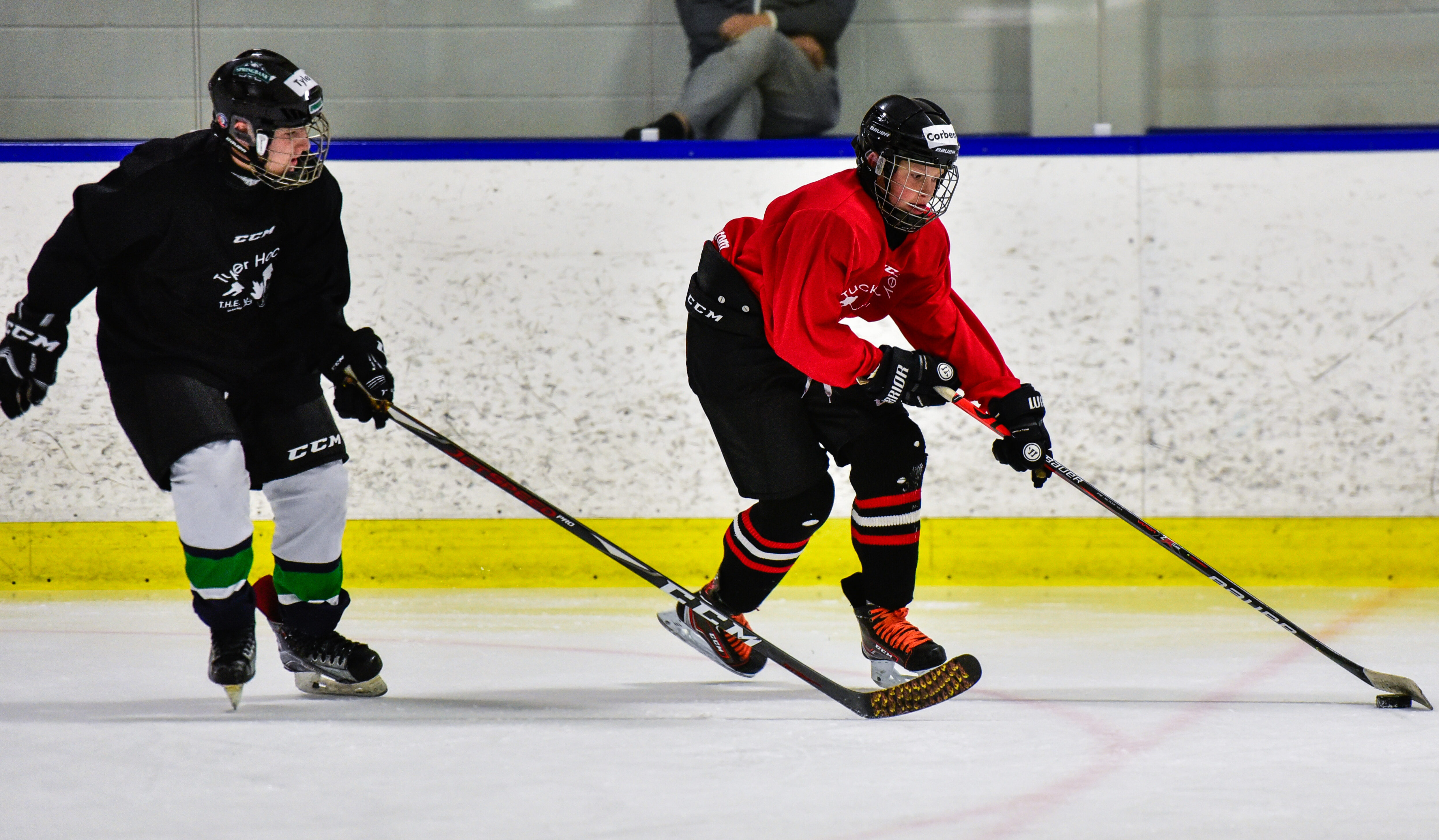
Skating is the most important skill of ice hockey. It is the foundation on which all other skills can be built upon. The level of performance attained by a player in passing, shooting, checking, and puck control are directly related to one’s skating ability.
The time spent improving a player’s skating is a worthwhile investment affecting better game performance.
What is the difference between “Technical skating” and “Tactical skating”?
Technical skating refers to biomechanical principles applied to maximize all skating skills required in ice hockey. It is the fundamentals of skating. Players need to skate in a proper hockey stance with good knee bend, balance and edge control. Technical skating consists of forward and backward: balance, edge control, starting, stopping, striding, tight turns, crossovers, pivots and progressions to agility and mobility skating. The fundamentals of all aspects of forwards, backwards and all direction skating requires specific technical practice to achieve mastery.
The teaching of technical skating over the last 40 years can be categorized to power skating. Power skating programs vary often from a figure skating base, to a hockey specific curriculum to just a conditioning component or combinations of all three. It is often deliberate practice.
When taught properly, the on ice instructor demos the skating skill, explaining the key teaching points, the players then try the skill and corrections are made to their skating technique. This deliberate teaching offers players better technique through proper repetition of skating drills. The drills involve thinking as well as skating. The instructor is reinforcing good skating techniques and attempting to get rid of bad skating habits. The objective is to make each player a better all round skater, smoother, and more efficient skater.
Technical skating is the foundation of playing the game. Players require a strong technical base of skating, otherwise they do not have the tools to play the game, keep up to the play and be involved in the play.
Tactical skating is the ability to skate in all game situations offensively and defensively, with and without a puck. The time spent on deliberate practice and professional skating instruction will provide the core to play in various game situations. Offensively this may mean drive skating, breakaway skating or evasive skating. Keeping the puck means protecting and handling the puck. Defensively it will help players to check and angle properly using stick checks and body checks as the game requires.
Players with a technical skating foundation have the ability to be in control in game situations. They will create and control time and space on the ice. With a better technical base, tactical skating will improve. Players will be more comfortable on the ice. They will be able to play more instinctively without thinking. With improved skating ability the game becomes more automatic. Players from the ages of 5 to 10 need to learn how to skate properly without and with the puck. Players who have learned to skate properly will be able to develop the ability to think the game as they begin to play competitively.
Hockey Sense can be best developed between the ages of 11 and 15 years of age. As technical skating is mastered; tactical skating skills with and without the puck will transfer to success in 1 on 1 and 2 on 1 or 2 and 3 on 2 or 3 situations. The foundation to 5 on 5 team play; systems are the individual skills of skating and puck control. The development pyramid below will illustrate the importance of investing the right amount of time at various age levels.
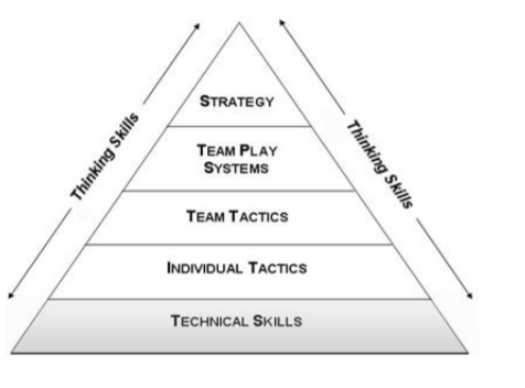
Skating is the most important technical skill in the foundation of development. When looking at the mix of technical and tactical skating training, a novice skater – 90% technical and 10% tactical, a bantam AA skater – 60% technical and 40% tactical and a professional hockey player – 20% technical, and 80% tactical respectively. While many players including professionals spend time and money on technical improvement in the off season, it would be wise for parents and players to ensure that skating is properly learned and practiced as they play the game of hockey as well.
Editor’s Note: Coach Rex wishes to acknowledge Wally Kozak for his insight and contributions to this article regarding the tactical component of skating. Thanks Wally for your valuable expertise.