Group Programs Development Optics
“Often Misconceptions &
Misunderstandings by Parents / Viewers”
Published December 19, 2023
There’s an expression.
“Perception is reality.”
Unfortunately, perception can be very misleading and result in a lot of misunderstanding. We see it all the time on social media channels. In today’s fast paced, deceptive and misleading information world, it’s a challenge to separate truths from falsehoods and facts from fiction.
Misunderstanding is sometimes the case when parents view a skills development on ice session from the arena stands. They do not really understand from their vantage point and hockey knowledge base what is truly going on with development.
What the on-ice instructors are doing, the purpose behind our coaching methodologies, program curriculum details, practice plan setup / reasoning, specific skill development drills and many key teaching points conveyed on the ice.
A prime example is our Strategic Shooting program.
In this development program we have the following objectives.
- To “increase” a player’s shooting knowledge
- To “improve” their shooting skills
- To “challenge players” to improve on their shooting & scoring abilities
- To have “fun”!
Throughout the program / sessions we are discussing and /or demonstrating the following to our on-ice participants.
- Our shooting philosophies
- Different types of hockey shots
- Proper mechanics for each type of hockey shot
(Example: shooting off stick side or non stick side)
- Good demos for each hockey shot
- Shooting progressions within each hockey shot
- Correction of bad shooting habits / technique and
- Reinforcing “smart shooting” accuracy tips and scoring strategies
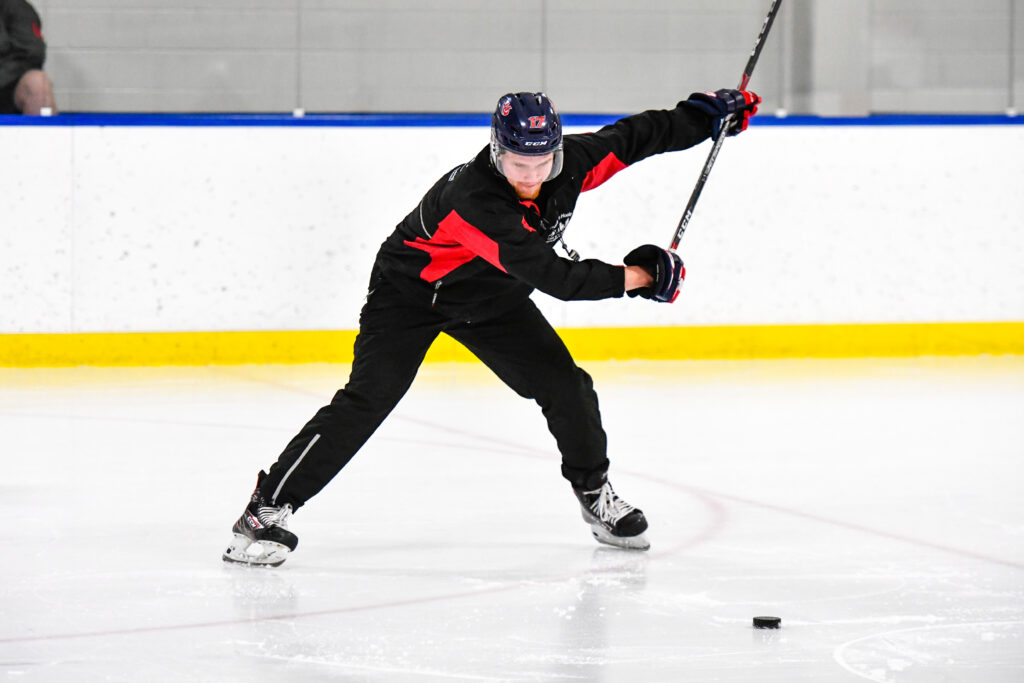
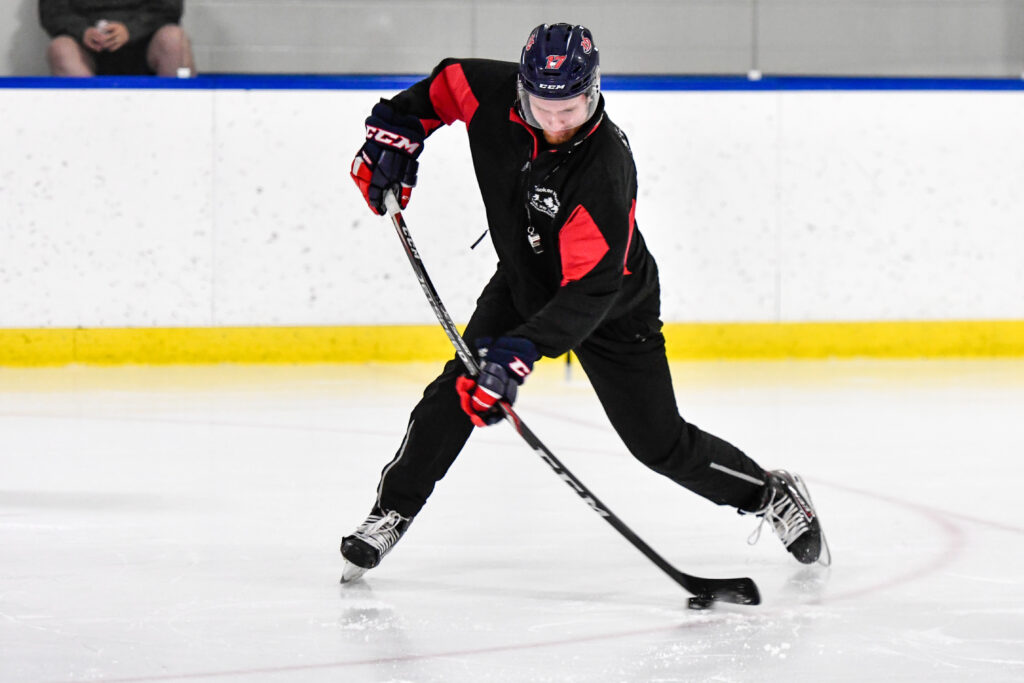
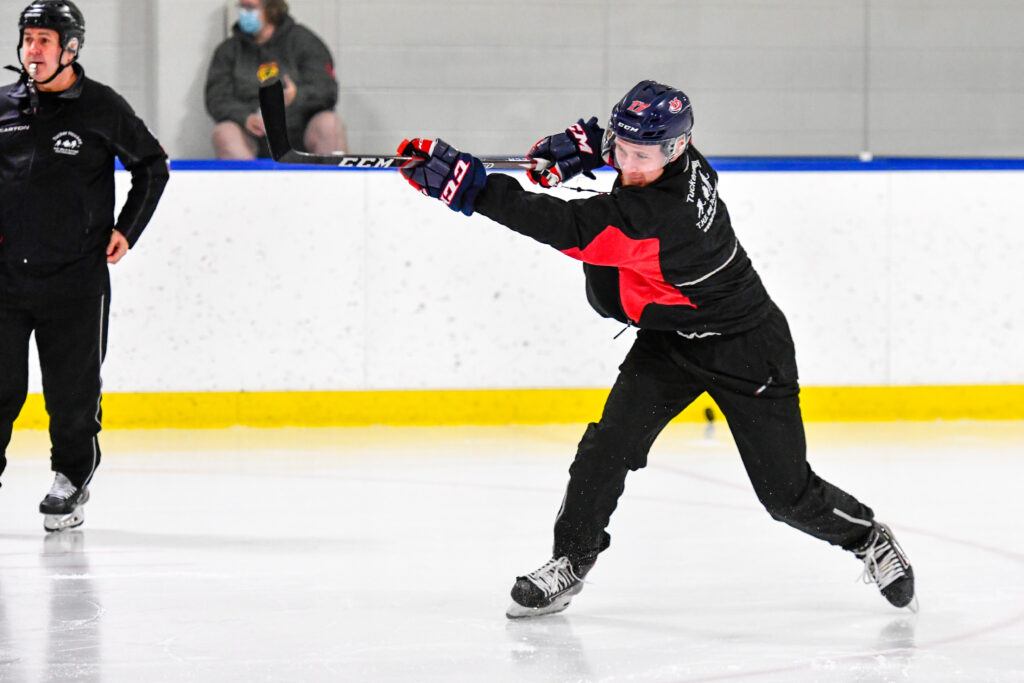
We always emphasize that good goal scorers have “accuracy and a quick release” in their shooting toolbox. They are not shooting the puck as hard as they can with their head down – missing the net with most of their shots!!
We always see a lot of bad habits / poor technique “no matter the age or skill levels”. This poor technique needs to be corrected again and again. It’s necessary to have good consistent shooting technique to produce favourable results. Players need to “figure it out” with lots of practice in time.
Bad habits / technique include some of the following:
- Not having proper control of the puck before releasing the shot.
- Not positioning the puck on the stick blade correctly – depending on the type of shot.
- Not shooting with their head up.
- Shooting as hard as they can without a purpose i.e. pick a target instead.
- Only shooting bar down – what about low shots as well?
- Shooting only with their wrists. Players need to load up and use their arms and legs as well.
- Not keeping their shoulders square and toe caps of their skates pointed to the net.
- Not aware of the advantages of shooting off the stick side leg as well as non stick side leg.
- No deception in releasing the puck i.e. changing the angle of the stick blade.
In our shooting programs, players are not competing against anyone else. It’s individual skill development. They are competing only against themselves to get better.
Yes, Sidney Crosby could be in our shooting program!!
We can comfortably handle an age range from U18 to U11 in our shooting group programs.
Often younger age players do not have the strength to perform the shooting skills or even the cognitive ability to understand the shooting knowledge we are sharing – such is the case with many U9 players.
4 subgroups / stations are created based on player’s age, size, and abilities.
Example: highest, high middle, low middle, and lowest skill groups.
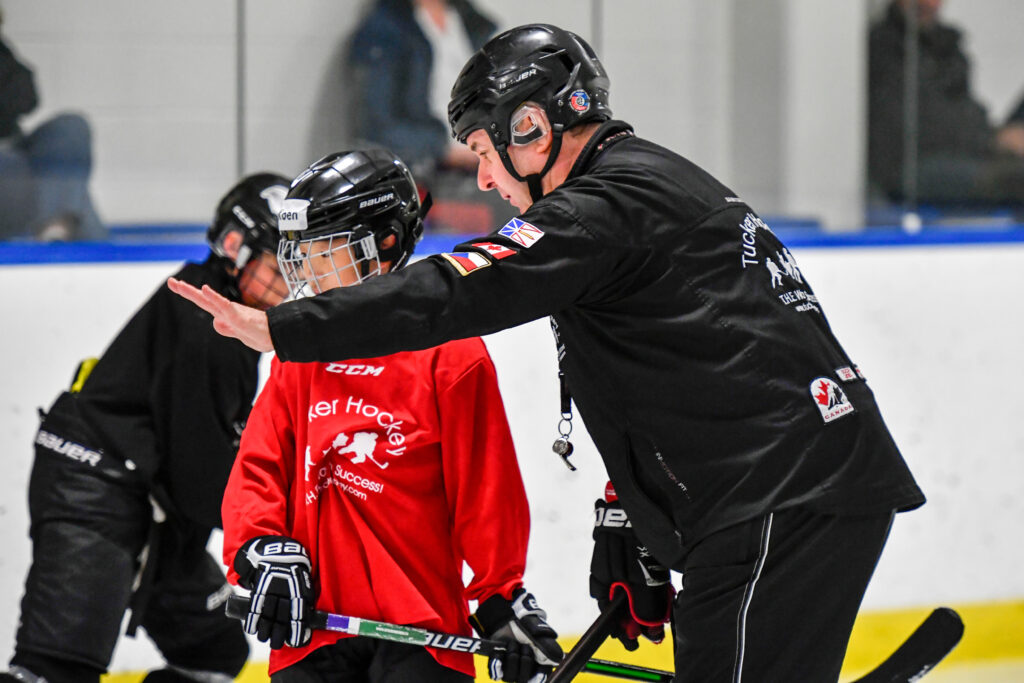
Each skills station is lead by a qualified assistant instructor and the overall program is directed and overseen by an experienced head instructor.
Players receive proper explanations and good demos. They have many opportunities to practice their shots. Receive correction on the fly by the assistant instructors. Get called in as one group by the head instructor to review and reinforce proper technique and teaching points. Players have more opportunities to practice again. This process is repeated and repeated etc. Yes, lots of good reps for each player.
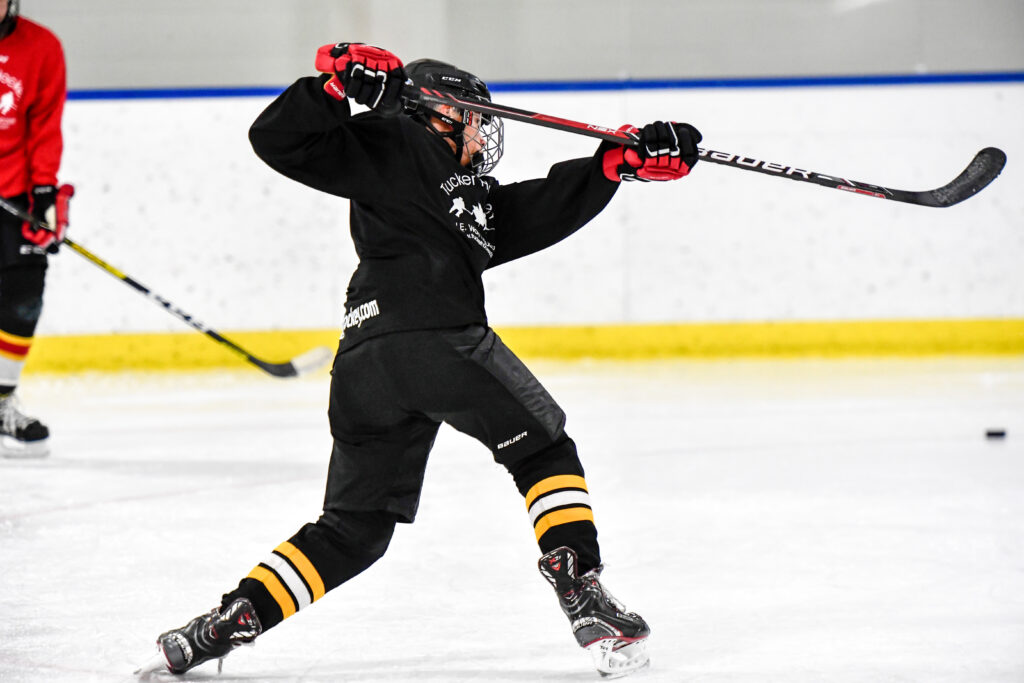
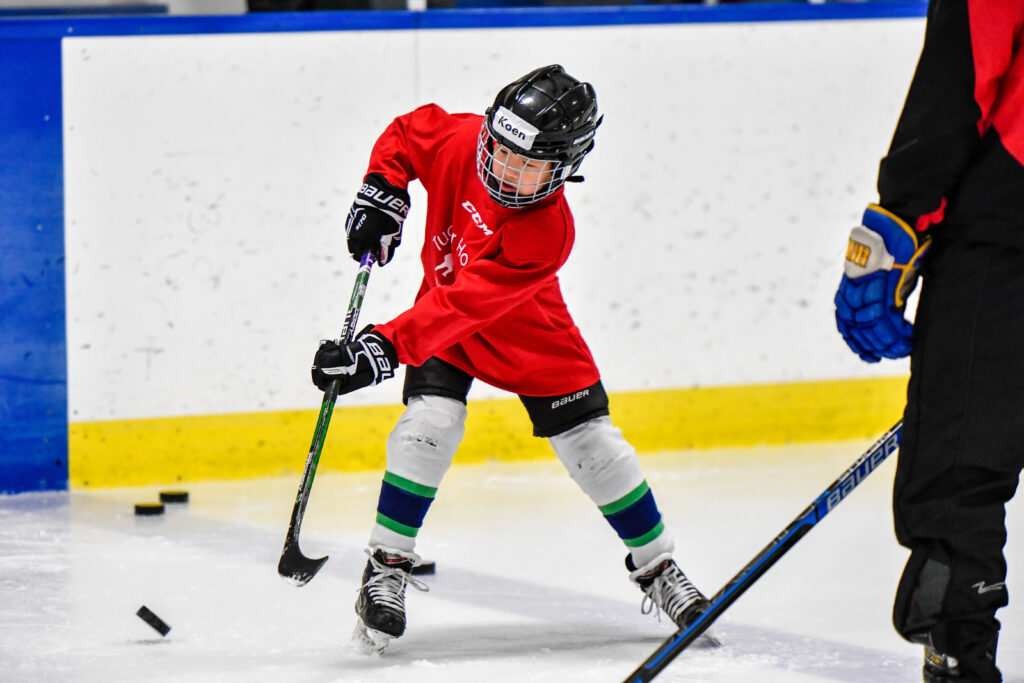
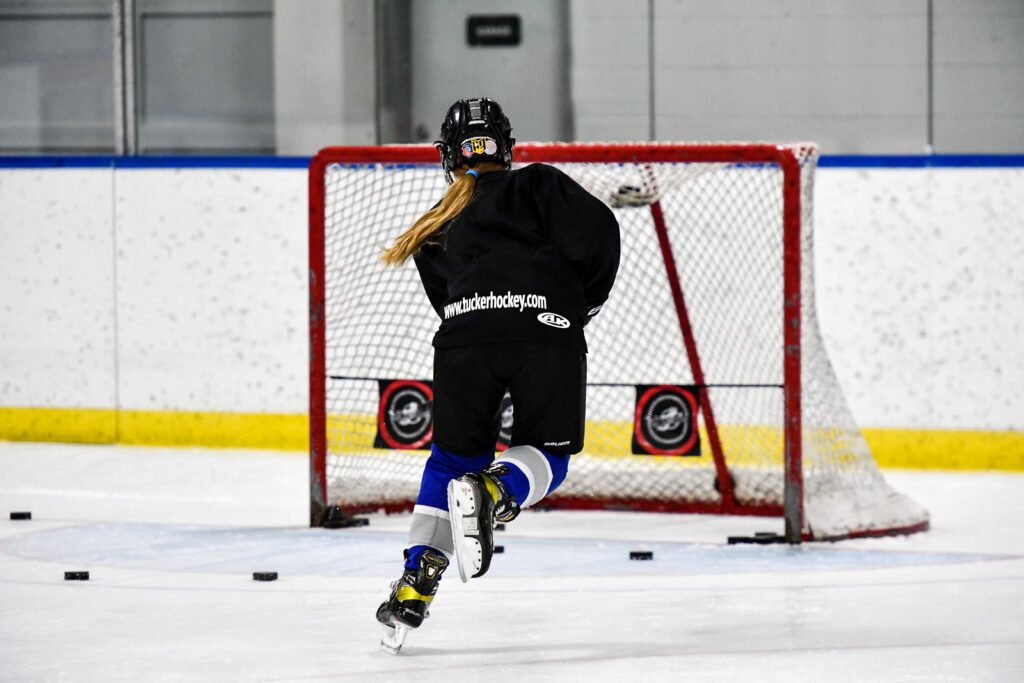
The instructors are not just moving pucks out of the nets so the players can continue shooting again! There’s much more to the development setup and process on the ice. When we look do we see and truly understand what is going on?
Here are a few pointers and some questions to help educate parents and help them better understand the development process:
- Again, with “individual skill development” it’s always the player & the drill. They are not competing against other players in the group.
- Being a younger player in a group of older & more skills players will not help your child get better when working on individual skills. It’s the player and the drill / skill.
- Conversely having an older player in a younger & less skilled group will not adversely affect his or her develop. Again, it’s the player and the drill /skill.
- Just because a player is older or physically bigger doesn’t mean that player is more skilled than a smaller player.
- Just because NHL players are doing an advanced skill, it doesn’t mean it is age appropriate for youth development.
- Players do not master a skill in 5 – 10 minutes of practice.
- Many good repetitions are critical to getting skilled at anything.
- Repetition can sometimes be boring. “Same old same old” but players need to love to train & repeat skills to master them. Players need to challenge themselves Example: To hit 6 targets out of 6 targets on the net.
“There is no glory in practice, but WITHOUT PRACTICE there is no glory” – Unknown
- If players can master the fundamentals – it looks easy & effortless. This is the key to mastery.
- Players need to be consistent. Challenge themselves to hit the net or targets all the time. “Shoot with a purpose”. No lazy shots!
- It takes 1,000’s of hours to get good at anything.
- Failure is part of the development process and ultimately future success.
- Pushing the players to go fast doesn’t mean good development. Often we need to slow things down for a player to acquire good shooting mechanics / technique.
- Players need to “Love to Train”. Put in the necessary good reps!
- More expensive hockey sticks doesn’t equate to better shooting. The foundation is “proper / good mechanics / technique”.
- Just because a player is really good in one age level doesn’t mean they will excel within the next older age group next season.
- Youths should play multiple sports and only specialize late in their teens.
- The best players are truly the best athletes.
- Players need to “get comfortable being uncomfortable” for future growth & development.
- Keep the enjoyment in the journey. Don’t place too much pressure on your child.
- A parent can provide every means to succeed but the player is driving the development bus. How bad does he or she want it? Do they just like hockey or do they really love hockey?
- Do they want to participate in the session / program? Or is it only the parent’s wish instead?
- Did your son or daughter have a good sleep and have a good nutritious meal prior to the on ice session?
- Players develop at different rates. Do your self a favour – stop comparing your child to others! Everyone develops in hockey and figures out their lot in life at their own speed.
- Just let them know you “love to watch them play / practice” and are proud of their daily efforts & progress!
- Players need to avoid complaining to their parents in the car on the way home. Rather be “proactive and talk to their coaches” during the session about their concerns – if they feel they are not challenged, if they do not understand why we are doing something on the ice, etc. Only talking to their parents after the session just frustrates everyone!
- Coaches want to challenge players & help them improve. We are working towards the same common goal. We are here to help and take great pleasure seeing players improve!
- Proper perspective is often required. Only a small percentage of players make a living from a sport. Keep the proper perspective / big picture.
- Stay in your lane. Coaches coach, players play and parent’s parent.
- When everyone does their job – the development process and results work a lot better!
Conclusion:
- The secret to hockey success lies in the mastering of the basics. It’s not just skill, but the player’s willingness to embrace the boredom of consistency. This is what separates the ordinary from the extraordinary.
- The goal is improvement for future success not for the present moment. It takes time to see skill results.
- In any sport not just hockey elite players are always learning, working on and fine tuning the fundamentals of their game. That is what makes them so good! Yes, it’s FUNDAMENTALS.
- Prime example is rookie sensation Connor Bedard of the Chicago Black Hawks. Connor during his youth dedicated endless hours into developing his shot i.e. quick release and accuracy. That is a big reason why he is such a good player today. It doesn’t happen overnight!
“Winners don’t just learn the fundamentals, they master them. You have to monitor your fundamentals constantly because the only thing that changes will be your attention to them.” – Michael Jordan
~Written by Rex Tucker