Tucker Hockey Tips
Instruction for U7 & U9 Players
Published on October 6, 2021
Many parents start coaching hockey when their first child begins to play. After attending an early season weekend coaching certification course, they begin their journey. For many rookie coaches they will follow their son or daughter through the minor hockey system from U7, to U9, to U11 etc.
I started teaching the 6 to 7 year-old age group back in 1997 during my early power skating days in the Czech Republic. Based on my experiences, I wish to share a few pointers on what I have learned and incorporated into my teaching over the past 25+ years on the ice.
For starters, one of my favorite age groups is the U7 & U9. It’s so rewarding to witness firsthand the improvement in player’s skills, their love of hockey grow on a session to session basis and witness the smiles on their faces!
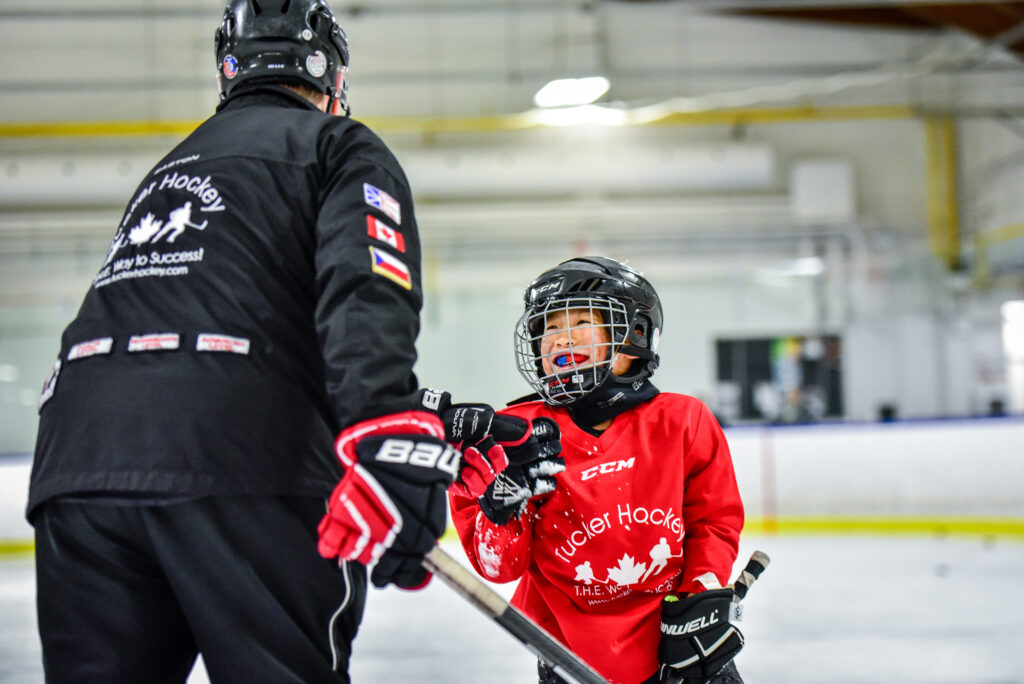
However, on many occasions it can be a very challenging task teaching this age and skill level! Why? Like Forrest Grump’s quote – “You never know what you are going to get!” Some days the kids are awesome – they are eating out of the palm of your instructional hand – paying attention i.e., watching and listening. But there are other days when they are indeed a handful – lacking attention, focus and commitment to skill development. They are kids! I have learned over the years as an instructor – always go on the ice being focused and well prepared; otherwise, it will be a valuable lesson in the art of teaching. You will have your hands full indeed and the coaching experience and / or results will not be so rewarding.
First and foremost, what I have learned is that on ice instruction for this age group requires a great deal of patience and the ability to be repetitive. If I had a dollar for every time I have said “Keep your head up”, “Bend your knees” or “Keep your stick on the ice” I would be a very wealthy man. However, it’s important to remember that they are only 6 or 7 years old in their physical, mental, and emotional development. Often on ice instructors, coaches and parents need to lower their expectations of what the kids can handle for hockey advancement on a daily basis.
There are often many factors beyond your control in this vocation. Over the years, the Tucker Hockey staff has discovered that many players show up at the rink and can be challenged by any of following:
- Equipment that does not fit properly especially skates, sticks too long, improper skate sharpenings etc. which will improve performance.
- Lack of a good meal. Players of all ages need proper nutrition and good calories to spend energy.
- Lack of a good night’s sleep. Players need proper rest to enjoy and perform well on the ice.
- Home and / or school issues can distract players and their enjoyment of the sport.
- Hyper personality from too much video games being played in their spare time.
- Sometimes it’s the parent’s wish not the child’s desire to be on the ice. It’s important for parents to listen to their child and understand what activities their child wants to do and enjoy. Do they desire more or less hockey?
- Also, many 6 to 7 year olds are physically ready, but some kids are not ready because they lack the emotional maturity, to participate in a group hockey program.
I remember conducting a power skating team session with a U9 minor team a few years ago. The kids lacked focus and were quite hyper on the ice. One of the U9 team coaches said jokingly “Maybe they are off their meds!” Never thought of it in this way… but there may be a little truth to this statement for some players especially after school during the late afternoon 4 pm team practice ice sessions.
We enjoy and preserve what we love
We love what we understand
We understand because we have been taught
The Tucker Hockey Way!
The Tucker Hockey Way has been to provide a positive and fun learning environment for the kids. The role of the instructors is to teach skating, hockey skills, life skills, and to have fun in the process to instill and grow the love of the game. There’s an art and science to connecting with the kids and helping them improve on their skating and hockey skills. It’s a balancing act to teach skating skills, not get too serious and make it an enjoyable experience.
Often, we will start teaching a skill and see how long we can work on the skill before we have to change things up! 2 repetitions or 3 repetitions, 1 length of the ice or 2 lengths of the ice of skating, 5 minutes, or 10 minutes of skill development. It’s like squeezing juice from an orange. We will see how much we can get out of the group today! Work on 5 to 10 minutes of skill development and than switch to a fun skating game such as hockey soccer, British bulldog, gorilla drill, battle ship, relay races, tennis ball scrimmage etc. We are always trying to adapt and to be flexible because the group dynamics change from one on ice session to another.
Here are a few coaching tips that we have employed in our programs to be successful.
- Name tags on the helmets – it helps to mention player’s names when instructing them
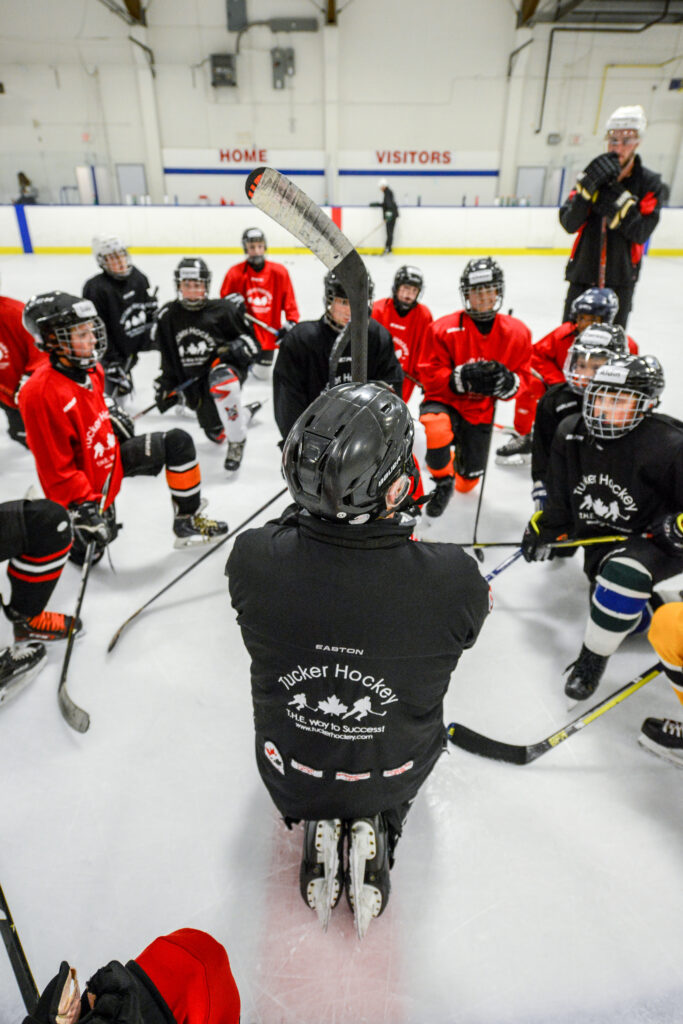
- Brief intro: of instructors and chat prior to the start of each session
- Effective communication requires short chats with simple direct language
- Instructor down on both knees at eye level when talking to the kids, shoulder to shoulder
- Players have their stick up – butt end on the ice / players on one knee
- Gentle Approach, captivate their interest, instill good values – discipline, respect, work hard and do their best. Instilling good values at an early age is very important.
- Ask them the odd question to keep them engaged.
- Keep them active – very little standing around. Explain the drill, demo the drill, and get them practicing the drill, correct as they go.
- Water break every 10 minutes
- Provide a variety of drills but give them time to play throughout the session.
- Good hockey stance, strong edge control and balance – the core fundamentals – at this age.
- Progression for technical skills – it starts with skating fundamentals, progresses to puck control, to passing and then to shooting.
- Try to improve their skills to do well at the next level – U9 etc.
- Smile, avoid being too serious or too intense – don’t scare the kids.
- Avoid negative feedback, lots of praise and positive reinforcement helps learning.
- Raise your voice to get their attention but a constant diet of yelling gets stale
- Minimum instructor to player ratio of 1 to 5.
- High energy – players feed off your energy and mood
- No sliding on the ice – safety first
- Notice kids who do a drill correctly and let them demo to the group. Kids want to be noticed and recognized – it helps them pay attention. Their parents like it too!
- Work on the weaker skating skills such as stopping, outside edge control and backward skating. Parents especially love to see their child improve in these areas for sure.
- Gradual pace – baby steps with more progressions, teaching falling and getting up properly.
- We often randomly give out most improved helmet stickers to players after each session. They like the recognition, and they pay attention and work harder as a result.
- High 5 the players after each session before going off the ice
- Praise the kids for a good job well done! Wish them well! Show them you care!
Since 1999, Tucker Hockey has a formula that works, with proven results. Kids need to feel comfortable on the ice, to be themselves, to be relaxed so that they can listen, watch, and learn. Players will often fall down during the skating drills again and again. We often say you can fall down…we want to see more players falling…it shows that you are trying hard to learn and to improve. But if you fall down you must get up faster than you fall down! Kids need to be instilled with a thirst to learn, to want to come to the rink and to be upset if they can’t. It’s important to have a gentle approach…not to be too intense and end up turning the kids off. It’s so important for players to pay attention – to watch and listen in order to maximize their opportunity for advancement. However, not all kids learn the same way, some learn by listening, some by watching, and all by doing. We often use the expression “It’s like throwing a pizza against the wall…. more sticks for some kids than others!” It is what it is…have to keep our expectations realistic.
Often parents will ask me what their son or daughter need to work on? My reply “Everything!” at this age level. A player may be a top skater at the Novice level compared to their peers but will he or she be a top skater at the U11, U13, U15, U16, U18 or Junior A levels compared to their peers? It’s important to keep working on the skills if a player wishes to progress and excel in the years to follow. A player needs to grow the desire to work hard, to learn to get better. We want to ensure that we have a positive influence on their skating skill development and love for the game. A better skater becomes a better hockey player. When you become a more accomplished hockey player, you become more successful, and therefore have more fun playing the game.
Bottom line for Tucker Hockey, it’s not about getting players to the NHL, rather it’s about instilling a love for the game, to enhance skating and hockey skills, and to make a “difference” in the life of a child.
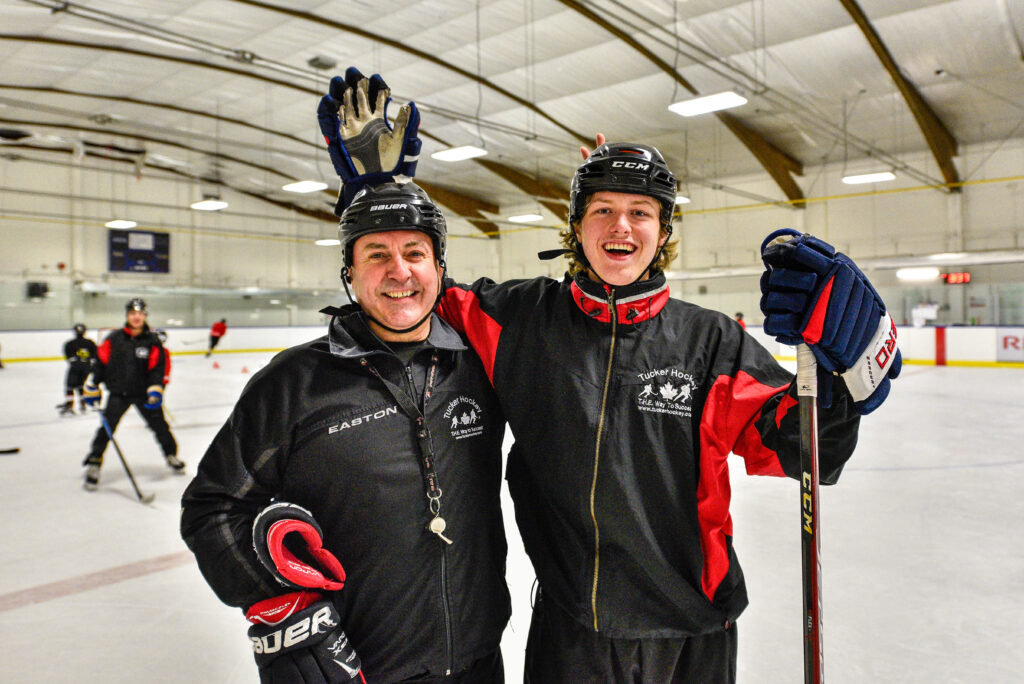
Below are a couple testimonials from recent past participants.
“Regardless of age, gender and initial skill level, Tucker Hockey is a great program for any child interested in improving their skating skills. The on-ice curriculum progresses at gradual pace and the instructors are very informative and helpful. Simply put, Tucker Hockey is an awesome program that I would highly recommend.”
~Julie Hickey, Mother to Bret, Past U9 player
“We liked the fact that the ice was always well run, great use of ice and time. The transition of drills to teach backwards skating was excellent. We would absolutely recommend and re-register in Tucker camps and/or ice sessions. Best camp my son has ever been in. “
~Kim & Srecko Zizakovic, Parents to Maksim, Past U9 player